

Disputes are an inevitable part of community association living.
Whether the issue involves rule enforcement, architectural changes, maintenance responsibilities, or disagreements between the board and homeowners, conflicts can quickly become emotional and difficult to manage.
In these moments, an HOA’s general counsel serves an important role beyond simply handling legal disputes.
General counsel can help boards navigate conflict strategically, protect the association’s legal interests, and guide conversations toward resolution before issues spiral into larger problems.
Providing Legal Clarity for the Board
One of general counsel’s primary responsibilities is helping the board understand its legal authority and obligations.
HOA boards have fiduciary duties to act in the best interests of the community, but applying governing documents fairly and consistently is not always straightforward.
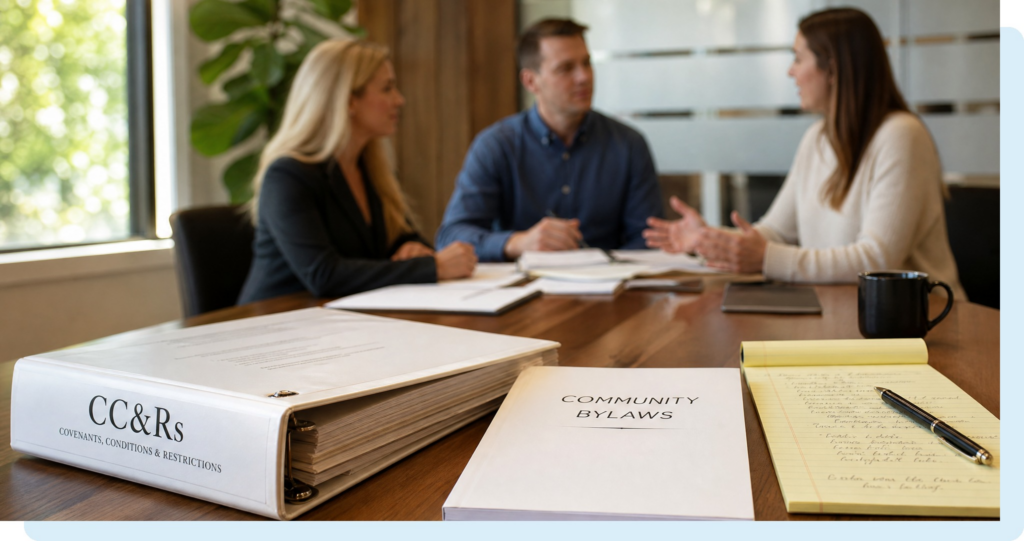
An HOA’s general counsel can provide clarity on bylaws, covenants, and applicable state laws so the board can make informed decisions rooted in sound governance.
Supporting Early Dispute Resolution
Legal guidance becomes especially valuable when communication begins to break down. In many disputes, tensions escalate because parties feel unheard or misunderstood.
An HOA’s general counsel can help reframe the issue, clarify legal boundaries, and create a more productive path forward. That may include recommending negotiation or mediation before litigation becomes necessary.
Many HOA disputes can be resolved through creative mediation strategies that focus on practical outcomes rather than rigid positions.
By helping the board evaluate resolution options and understand potential tradeoffs, general counsel can support outcomes that protect both community relationships and the board’s responsibilities.
Ensuring Proper Process in HOA Cases
An HOA’s general counsel also helps ensure that the board follows proper procedures during disputes. That may include guidance on notice requirements, hearings, enforcement actions, fines, and documentation.
Even when a board’s position is legally sound, procedural mistakes can weaken that position and create unnecessary exposure.
Preventing Escalation of HOA Disputes
Perhaps most importantly, general counsel helps boards maintain perspective.
Not every disagreement requires aggressive legal action, but not every dispute should be ignored either.
By assessing risk, weighing potential outcomes, and identifying the most effective response, general counsel can help boards recognize opportunities to de-escalate disputes before they reach court, reducing both financial costs and stress for everyone involved.
The goal is to resolve conflict in a way that protects the long-term health of the community. With the right strategy and guidance, many HOA disputes can be resolved through mediation and other practical solutions.
If your association is facing a difficult conflict, contact Windsor PLC to assess the situation and work toward a productive resolution.
Frequently Asked Questions About HOA Disputes
When should an HOA involve general counsel in a dispute?
It is wise to involve general counsel early, especially when disputes involve legal interpretation, enforcement concerns, or escalating tensions that could lead to formal claims.
Can general counsel help avoid litigation?
Yes. General counsel often assist with negotiation, mediation, and risk assessment, helping resolve conflicts before they become lawsuits.
Can mediation help resolve HOA disputes before litigation?
Yes. Mediation can provide a structured, lower-conflict path to resolution by helping parties communicate more effectively and explore practical solutions before disputes escalate into costly litigation.